








Will Andromeda collide with the Milky Way? Astronomers have made a new forecast for the next 10 billion years


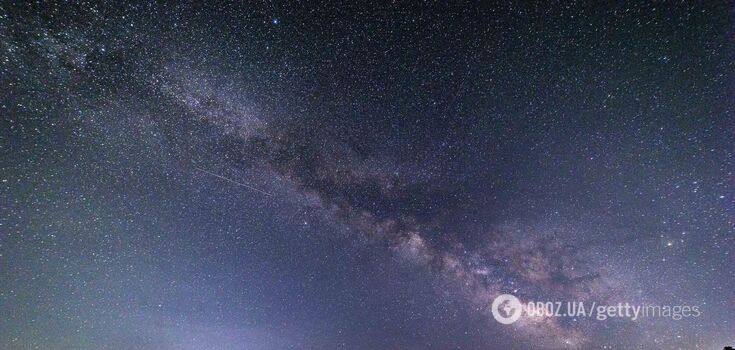
Observations of Andromeda and our own Milky Way galaxy are ongoing, and as scientists gain more accurate information, they can make better predictions about when they might collide. In the new study, the team looked at the latest and most accurate observations made by the Gaia and Hubble space telescopes.
The astronomers found that uncertainty around Andromeda (M31) and Messier 33 (a spiral galaxy of the Sc type located about 3.14 million light-years from our planet in the Triangle constellation) significantly changes the probability of Andromeda colliding with the Milky Way. And at the moment, these predictions are about 50 percent over the next 10 billion years, Ifl Science writes.
"Predicting future collisions requires knowledge of the current coordinates, velocities, and masses of the systems involved in the interaction. In addition to the gravitational force between galaxies, dynamic friction is the dominant process leading to a collision. It describes the transfer of orbital kinetic energy into the internal energy of the objects involved and, as a result, leads to the collapse of galactic orbits," the team explained in their paper.
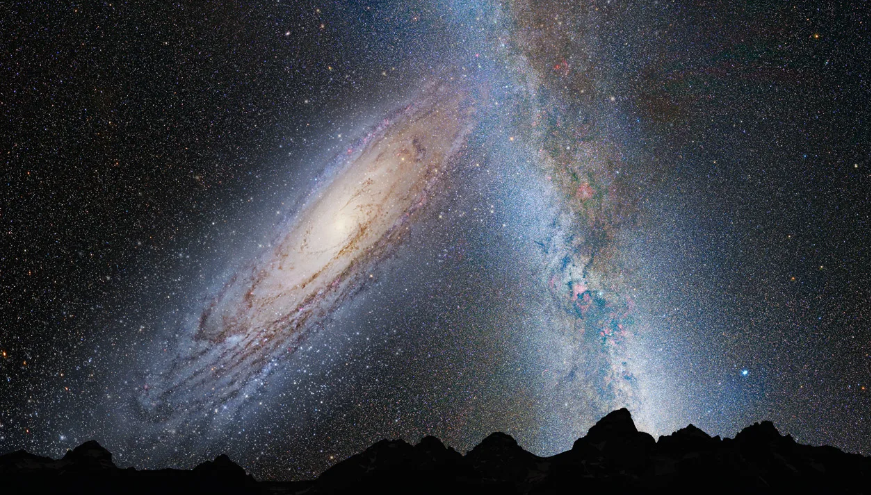
An illustration of the stage of a proposed collision between our Milky Way galaxy and the neighboring Andromeda galaxy.
Source: science.nasa.gov
According to the scientists, the inclusion of M33 increases the likelihood of a merger, but the orbit of the Large Magellanic Cloud runs perpendicular to the orbit of the Milky Way and Andromeda, making a collision less likely.
"In the complete system, we found that the uncertainty of the current positions, motions, and masses of all the galaxies leaves room for radically different outcomes, and there is a 50 percent chance that the Milky Way and Andromeda will not merge within the next 10 billion years," they say.
Scientists do not guarantee the accuracy of their predictions and are confident that more observations are needed to determine whether Andromeda will collide with our galaxy. But they say that today the statements about the inevitable destruction of our Galaxy look greatly exaggerated.
Only verified information is available on the OBOZ.UA Telegram channel and Viber. Do not fall for fakes!

 Subscribe
 Subscribe