












Why do people see colors that aren't really there: what is the phenomenon of a blue or white dress?


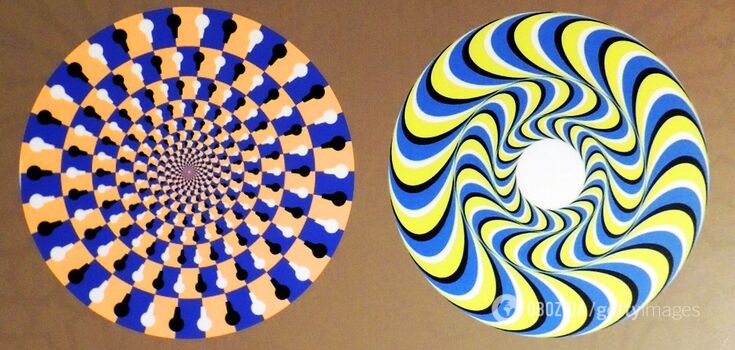
Have you ever been led by an optical illusion to see colors that weren't there? Why do some people see one color in the same image and others see another? How can colors be different from what they really are?
In 2024, scientists conducted a study to compare its results with the phenomenon of the blue or white dress – people's reactions to a photo that in 2015 sparked a heated debate with a simple question: what color is it: blue and black or white and gold, Live Science writes.
Experts explained that in some cases the answer is related to lighting, while in others it depends on our memory or what our photoreceptors do.
After the image of the dress went viral, the scientists analyzed the dilemma by asking 1400 participants what they thought the color of the dress would be if the lighting changed. They found that people's expectations about the lighting affected the color of the dress. People who assumed that the dress was shot under warm light or incandescent light thought the dress was blue and black, while people who assumed the light was cool or daylight saw white and gold.
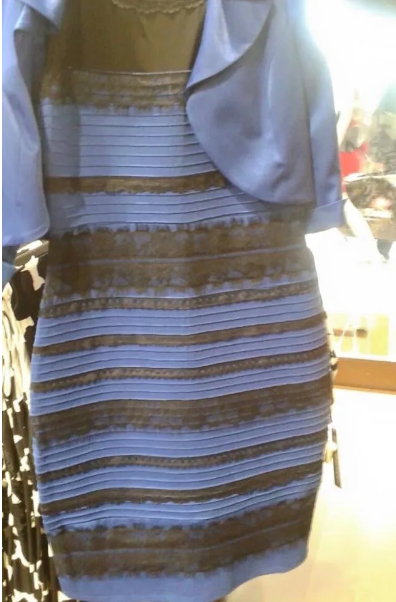
A picture of a dress that caused a lot of controversy among users back in 2015.
Source: tumblr.com
That is, people's expectations about the environment of an object influenced their perception of colors.
"We don't disagree about white and gold or blue and black. The differences are related to whether those colors are applied to that image," said Bevil Conway, a neuroscientist and visual scientist at the National Institutes of Health in Maryland.
Memory may play a role in how we see color. When we look at a familiar object, our brain assigns it the expected shade or even enhances its color.
Now, scientists have conducted a new study in which they asked participants to bring colored objects for an experiment. The next task was to determine the color of the objects under different room lighting. Despite the different conditions, participants had no trouble identifying the original colors of the objects. Experts call this result the "color constancy effect".






This color memory effect also explains why you tend to "see" color in the dark, even if there is no light stimulation: your brain probably just remembers it. On the other hand, when an object is unfamiliar, your brain may assign a color based on what you expect it to look like.
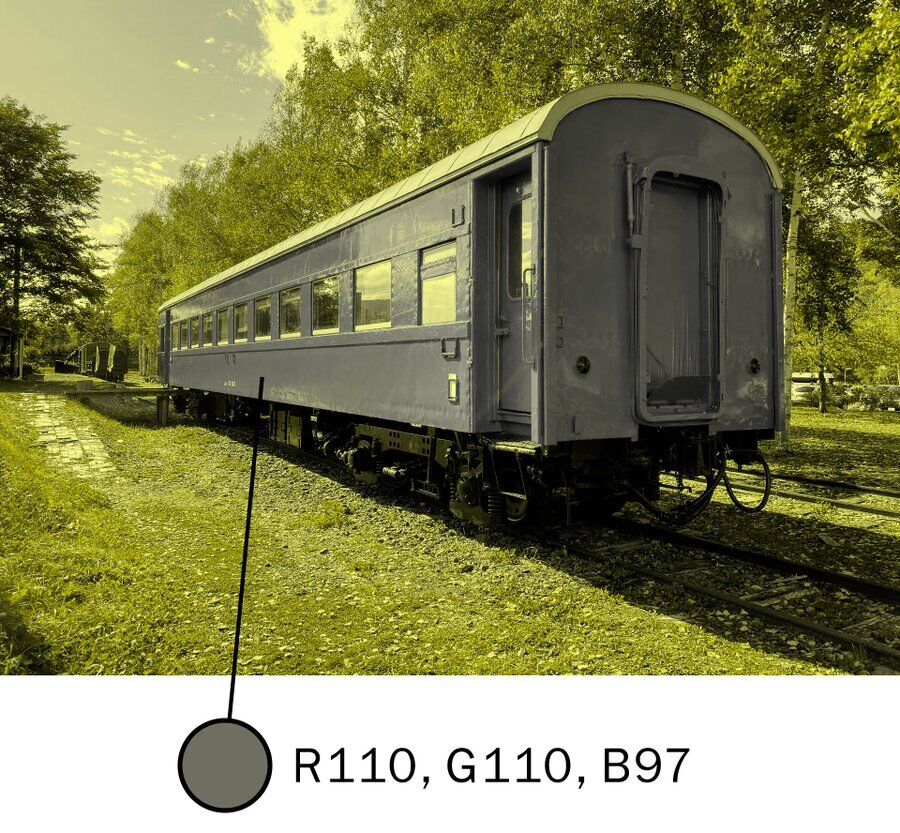
The train image was created by psychologist Akiyoshi Kitaoka. The train does not have a blue pixel, although some people may think it does.
Source: x.com/AkiyoshiKitaoka
Most people have three types of color photoreceptors, or cones, which are named according to the wavelengths they detect: long, medium, and short.
The "long" and "medium" cones best perceive light in the yellow and green wavelengths of the visible spectrum. Meanwhile, the 'short' cone is best at picking up lavender or violet light," explains Sarah Patterson, a neuroscientist at the University of Washington.
Scientists say that more than one study is still needed to fully understand how our brains perceive colors.
"The hardest part is understanding 'where' it happens in the brain. We still don't understand how or which neurons are responsible for comparing cone activity in the retina," says Sarah.
And, to succeed in understanding color perception, a much more productive dialog between different areas of intellectual activity is needed. "This includes art, philosophy, and science. It's much more than just visual," the scientist says.
Only verified information is available on the OBOZ.UA Telegram channel and Viber. Don't fall for fakes!

 Subscribe
 Subscribe