
Society

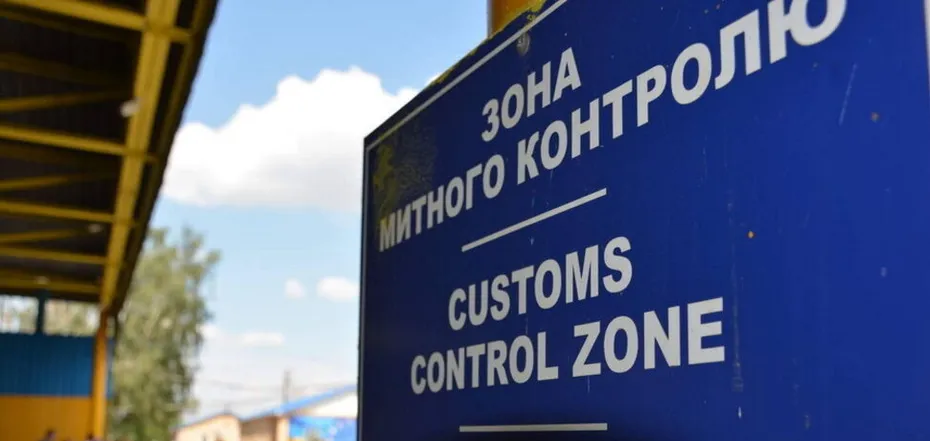
AI has its limitations, and those need to be discussed too. Source: Customs


Imagine a customs officer who works without breaks or days off. Who can’t be called on the phone. Who can’t be slipped an envelope. Who doesn’t know your name, your connections, or who called yesterday from the "right" number. Who compares your declaration in seconds against thousands of similar shipments across the country, against world prices – and either clears it or raises a red flag.
This is what the AI future of Ukrainian customs should look like.
This isn’t science fiction. It’s something that needs to happen here and now. Not new open competitions, not public councils, not new fighters against old corruption.
It’s important not to turn this into another "digital hype" project from consultants in suits. Because real digitalization isn’t about convenience. It’s about changing the architecture of the state: when more and more decisions depend not on a person but on transparent rules – leaving less and less room for backroom deals.
That’s why this process needs to be led by AI engineers, not by former customs officials talking about new technology.
Three things AI guarantees that a human cannot
I’m not romanticizing the technology. AI has its limitations, and those need to be discussed too. But there are three areas where the algorithm’s advantage over a human is structural, not situational.
First: AI doesn’t take bribes. Not because it’s "virtuous" in some moral sense. It simply has no bank account, no needs, no fear. Calling it is pointless, sending it a "gift" is impossible. That’s not a virtue – it’s architecture.
Second: AI is consistent. The algorithm applies the same criteria to the first declaration and the millionth. It doesn’t know that this company is "ours" and that one is "theirs." It doesn’t know who called yesterday. Equal treatment isn’t a declared value here – it’s a technical impossibility of doing otherwise.
Third: AI leaves a trail. Every decision is logged. Every deviation from standard protocol is documented. If a human manually overrides the algorithm’s decision, it’s visible. That’s real accountability — not an oath on the Constitution, but a timestamped digital log of actions.
"But what about smuggling?" – where AI won’t replace a dog’s nose
Let’s be honest here. AI won’t replace a customs dog sniffing luggage. It won’t replace an officer who knows the local smuggling market from the inside. Physical smuggling – excisable goods, weapons, drugs – requires a physical response.
But it’s precisely where the state loses the most money that algorithms have the greatest advantage. Most budget losses come not from classic smuggling but from undervaluing customs value, manipulating commodity codes, and using shell intermediaries. This is exactly where an algorithm can automatically compare a declared price against thousands of comparable transactions and spot what the human eye often misses.
These are the billions that never reach the budget every year. And no investigation will recover them as effectively as a system that never lets them get lost in the first place.
What the system is afraid of – and why that matters
The biggest resistance to customs digitalization isn’t technical. It’s human and political.
"The flows" aren’t just corruption among rank-and-file inspectors. They’re vertically integrated schemes with interests at every level, top to bottom. Whoever "runs" a flow has no interest in a system where there’s no one left to call. So the fight for AI in customs isn’t just an IT project. It’s a fight against the specific beneficiaries of the current disorder.
That’s why, alongside the technology, three things are needed:
• an independent targeting center with direct access to data outside the departmental hierarchy;
• public analytics – regular dashboards of customs-value deviations by product category, a kind of "wall of shame";
• criminal liability for manually overriding algorithmic decisions after the fact.
Without these, AI will become an expensive toy that eventually gets "tuned" to serve the same people as before.
Orest Mandziy, whom the Cabinet of Ministers recently appointed head of the State Customs Service, came from NABU. That’s certainly better than yet another "insider" from the customs underground. But a detective, even the best one, is not a reform. If Mandziy genuinely wants to break the system rather than just replace its face, he doesn’t need to fight criminals by hand — he needs a new architecture in which crime becomes technically much harder, or impossible altogether.
That means one thing: digitalization and an AI-based risk-analysis system must become priority number one – not in a five-year strategy, but in the first months of his tenure. Every month without it is billions of dollars flowing where they shouldn’t. And no detective with a warrant will recover what a properly configured system could have simply never let out the door.
What AI can actually do at customs – and what it’s already doing
Let’s get specific. Because talk of "digitalization" often stops at pretty slides without getting to the substance.
Real-time risk analysis. AI simultaneously evaluates dozens of parameters for each declaration: weight, route, sender profile, atypical cargo characteristics, product photos, discrepancies between declared value and market prices. A human is physically incapable of analyzing that many parameters at once. An algorithm can, in milliseconds.
Anomalies invisible to the eye. Machine-learning systems can already flag inconsistencies in documents and detect patterns typical of undervaluation or product-code substitution schemes – even when each individual declaration looks flawless on its own.
Learning from its own mistakes. Machine-learning models can become increasingly accurate as data accumulates and algorithms improve. A scheme that worked last quarter ends up in the risk database by the next one. "Gray" operators can’t negotiate an "update" to the rules with an algorithm — unlike with the head of a regional customs office.
Who’s already on this road
This isn’t theory. While Ukraine hopes to eradicate corruption by appointing "one honest person," other countries are already building systems that no smuggler can slip a stack of dollars into — let alone a suitcase of euros.
China has rolled out Intelligent Customs Inspection, a system that uses AI to analyze scanned images of containers and luggage, in many cases substantially reducing the need for human intervention in cargo screening and selection for additional inspection. This is a country with one of the largest trade volumes in the world – and the system runs at industrial scale.
India is systematically deploying data analytics and machine learning in customs risk management. The technology tracks supply chains, profiles suppliers, and checks HS classification codes against actual goods – automatically, without a human intermediary at key stages.
The European Union is moving toward a "data first, form later" model: automated risk analysis is meant to replace the chaotic manual selection of cargo for inspection. AI solutions are already being used for tariff classification, fraud detection, and speeding up clearance of low-risk shipments.
The United States, through Customs and Border Protection, is actively developing AI support for supply-chain management, with an emphasis on detecting illegal goods and counterfeits through large-scale data analysis.
The World Customs Organization has set a strategic goal: moving toward SMART borders – Secure, Measurable, Automated, Risk-based, Technology-driven. Automated risk management is no longer optional – it’s the direction modern customs systems are heading.
Other News




The long-awaited VW crossover cheaper than Duster was shown in photos
The Tera is being prepared for the premiere
How to boil beets in 10 minutes: an elementary method that will suit everyone
You don't even have to turn on the stove









Delicious and healthy "Napoleon" made from phyllo dough: it takes a few minutes to prepare
The easiest way to make a popular dessert

The most fashionable manicure color for spring 2025: five periwinkle designs
Spring 2025 brings a new color favorite in the world of manicure