








Rare venom-spraying scorpion was found in Colombia


A scientist has discovered the first species of South American scorpion that sprays its venom. This behavior has previously been observed in only two arthropod genera living in North America and Africa.
The new species, called Tityus achilles (T. achilles), was discovered in the department of Cundinamarca in Colombia, in the mountainous Magdelena rainforest region. It is unique and requires additional research, LiveScience writes.
Scorpions are known for their stingers and they use venom to subdue prey and protect themselves from predators. Their tails end in a structure known as a telson, which contains a bulb filled with venom. The telson has a sharpened stinger that usually injects the venom.
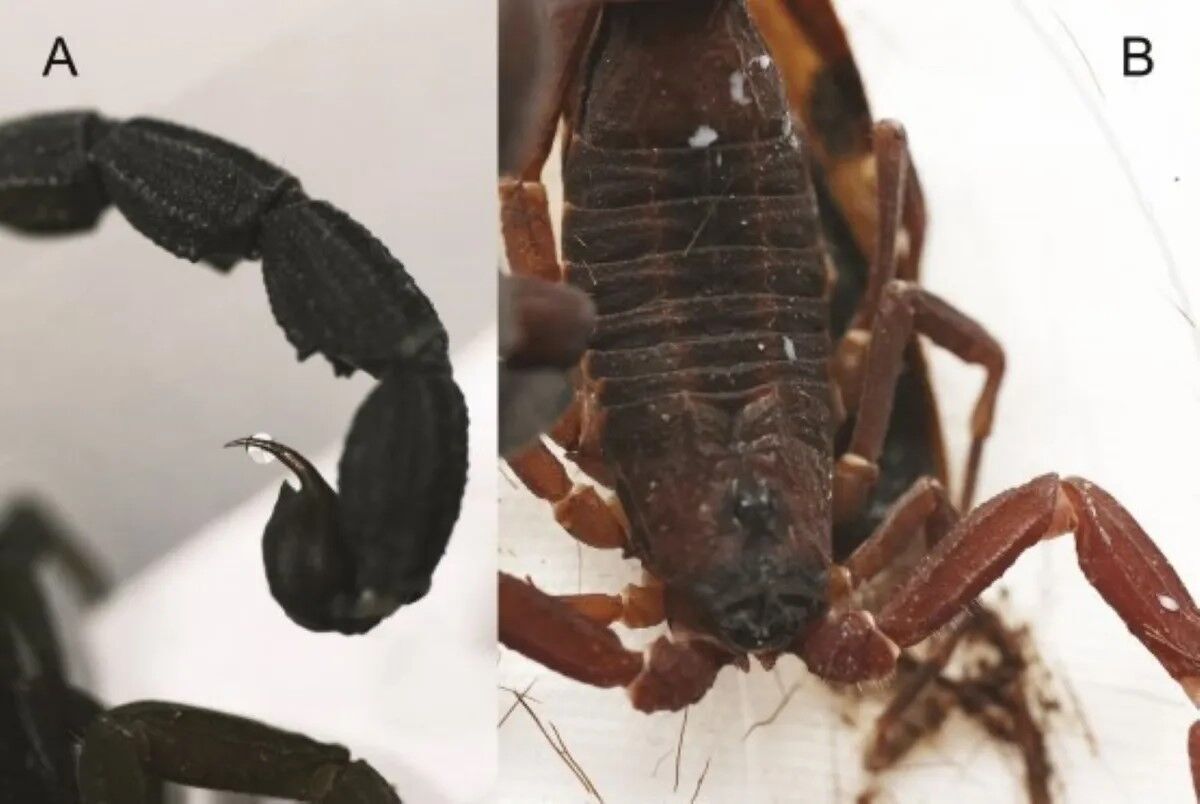
The scorpion is able to deliver venom through its sting as well as through a pre-venom secretion (white droplet visible).
Source: Leo Labore/Zoological Journal of the Linnean Society
"Most scorpions are probably capable of spraying venom. They just don't do it. This extreme behavioral response is known to occur regularly in only two genera," said study author Leo Laborieux.
According to scientists, the technique of spraying toxins can also be seen in cobras, which can also spray their opponents with venom. Toxins that are applied externally in this way are called toxins.
But unlike other organisms that use toxins, the T. achilles scorpion can both inject and spray venom at the same time, the researchers say.
Spraying venom is less risky – it does not require direct physical contact. But it is also less targeted and the effects of the venom are less serious.
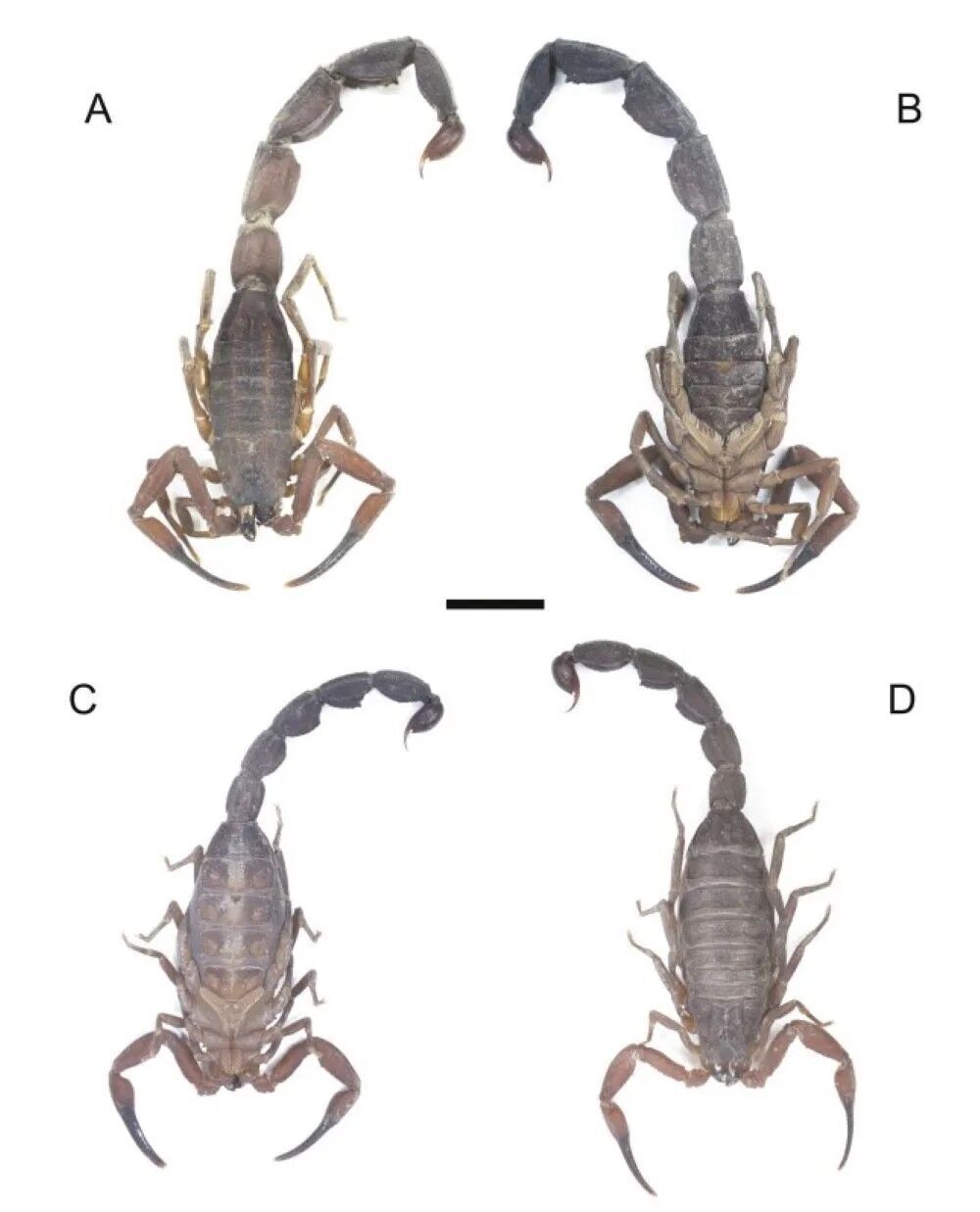
T. achilles uses its venom as a defense mechanism against predators.
Source: Leo Labore/Zoological Journal of the Linnean Society
However, if the toxins are sprayed directly into the face, it may be enough to scare off the predator and allow the scorpion to escape, experts say. The angle of the toxic spray produced by T. achilles suggests that it can be aimed squarely at the eyes and nose of its attackers.






Leo Laborieux tested the newly discovered scorpion's ability to spray its venom by pressing it with a drinking straw. He tested 10 young scorpions and recorded 46 venom emissions that reached a maximum distance of 36 centimeters. According to the scientist, most of the venom pulses were directed forward, although some were also directed backward or upward.
Most of the liquid emissions were clear, indicating that they consisted of pre-venom, a toxic liquid that is usually ejected before the stronger true venom, which has a milky tint, Laborieux explained.
Only verified information is available on the OBOZ.UA Telegram channel and Viber. Do not fall for fakes!

 Subscribe
 Subscribe