










Unique pterosaur fossils discovered in Scotland: it is a never-before-seen species


Dinosaurs inhabited the Earth about 66 million years ago but suddenly disappeared during the so-called Cretaceous extinction. For many years, it was believed that climate change had destroyed the food chain of the huge reptiles. However, in the 1980s, paleontologists discovered a layer of iridium, an element found in huge quantities in space.
Scientists now argue that these two factors are linked, and both were likely caused by a huge asteroid hitting the Earth. Recently, the scientific world was shocked by the discovery of a unique pterosaur remains in Scotland. The Daily Mail has told more about the never-before-seen species.
The unique find was made on the Isle of Skye. The winged reptile called Ceoptera evansae lived 168 to 166 million years ago in the Jurassic period. The paleontologists spotted the remains during an excursion to Elgol, on the southwest coast. A long preparation was carried out before the bones were scanned.
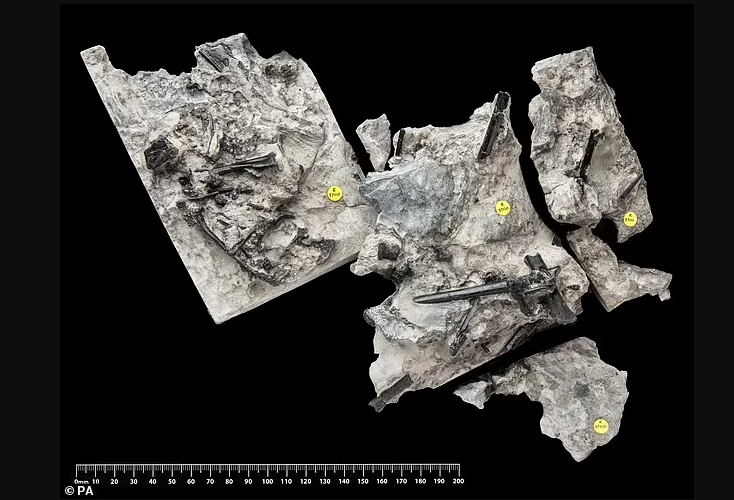
The remains of a dinosaur
Source: PA
The skeleton is very damaged, and only some parts of the limbs, wings, and spine can be identified, but even these details provide significant insight into the evolutionary history of this species.
The remains of pterosaurs known as Darwinoptera have already been found in China. Scientists now say that they probably underestimated the species' distribution area.
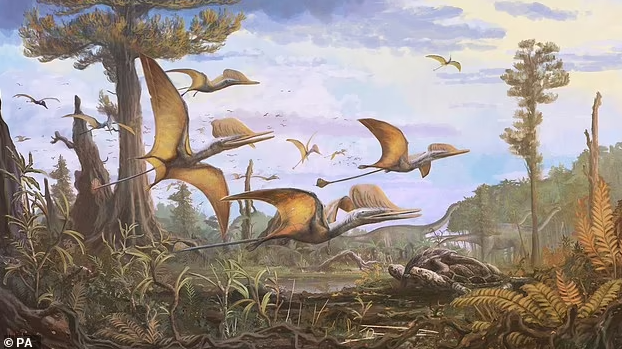
Flying dinosaurs
Source: PA
Prof. Paul Barrett, a scientist at the Natural History Museum, emphasized that the discovery helps narrow the time frame of several major events in the evolution of reptiles with wings.
The origin of the name is quite interesting. The first part "cheo" in the Scottish Gaelic dialect means fog, and the Latin "ptera" translates as wing. The second part of the term, "evansae," honors the British paleontologist Professor Susan Evans, who has long explored the Isle of Skye.






The lead author of the study, Liz Martin-Silverstone from the University of Bristol, added: "The time from which Ceoptera comes is one of the most important periods in the evolution of pterosaurs."
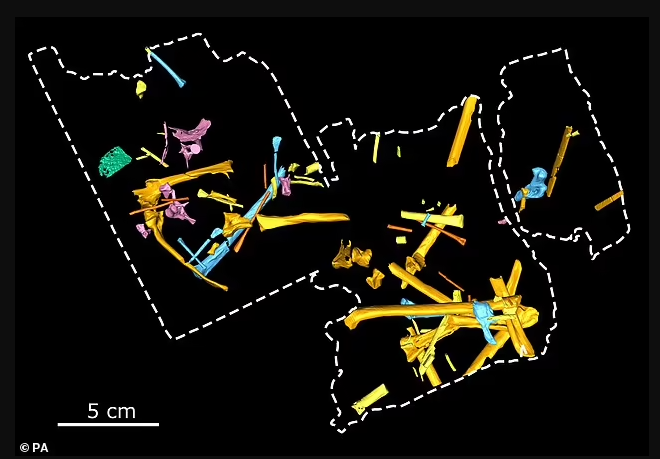
Remains
Source: PA
The discovery brought humanity closer to understanding where and when more advanced pterosaurs evolved.
Subscribe to OBOZ.UA channels in Telegram and Viber to keep up with the latest events.

 Subscribe
 Subscribe