






Photographer captures extremely rare "aurora curls": how they form in the Earth's atmosphere


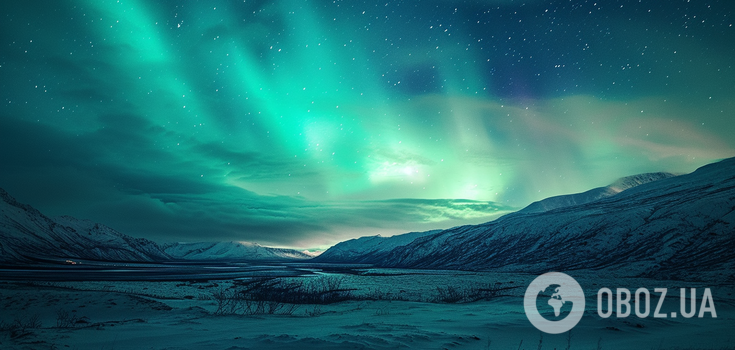
In the night sky over Iceland, a very rare phenomenon was recorded, which scientists conventionally call "aurora curls". The green "aurora curls" are the result of large waves vibrating in the Earth's magnetic field and were caused by solar particles crashing into our planet.
Geoff Dye, an astrophotographer and member of The World at Night (TWAN) project, noticed a zigzagging light show over Kerid, a crater lake in southern Iceland. How the "aurora curls" are formed and what makes the phenomenon unique, Live Science told.
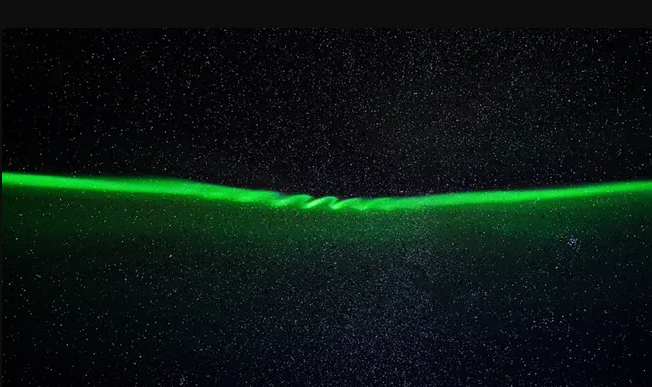
Strange curls.
Source: Jeff Dai
The aurora occurs when high-energy particles from the Sun bypass the Earth's magnetic field or magnetosphere and activate gas molecules, resulting in the emission of colored light.
But the aurorae are a rare, almost unique phenomenon. This is the so-called highly organized version of these lights caused by massive ripples in the magnetosphere known as ultra-low frequency waves (ULF). The cause of the magnetic jolts is called solar radiation bursts. The solar wind seems to collide with the Earth's protective shield and can cause the atmosphere to "ring like a guitar string."
Usually ULF waves are invisible and can only be detected with high-tech instruments tuned to the upper atmosphere. The astrophotographer managed to capture a unique band of light that took the form of waves.
Xing-Yu Li, an expert on ULF waves at Peking University, also resorted to comparing the magnetic field to a guitar string. There are several types of ULF waves, which can be divided into two main groups: pulsating irregular (Pi) waves, which have irregular wavelengths; and pulsating continuous (Pc) waves.
It is not entirely clear which type of waves created the aurora borealis swirls - scientific equipment did not pick up the magnetic jolts. Li suggested that the magnetic pulsations had a wavelength of about 1 km.






Auroras and ULF waves are more likely to occur during periods of high solar activity.
Subscribe to OBOZ.UA channels in Telegram and Viber to keep up with the latest events.

 Subscribe
 Subscribe